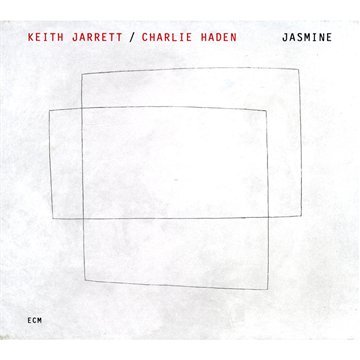
Jasmine marks Keith Jarrett's first recorded collaboration in decades other than with his standards trio, and reunites him with the great bassist Charlie Haden, a close partner until the mid-seventies. Intimate, spontaneous and warm, this album of love songs recorded at Jarrett's home, has affinities, in its unaffected directness, with his solo collection The Melody At Night With You. These deeply felt performances should inspire any listener "to call your wife or husband or lover in late at night," as Jarrett says in his liner notes, "These are great love songs played by players who are trying, mostly, to keep the message intact." The program on Jasmine includes such classic songs as "Body and Soul", "For All We Know" , "Where Can I Go Without You", "Don't Ever Leave Me" as well as a rare Jarrett cover of a contemporary pop song, "One Day I'll Fly Away". Jarrett and Haden play the music and nothing but the music - as only they can. As Keith Jarrett says in his liner notes: "This is spontaneous music made on the spot without any preparation save our dedication throughout our lives that we won't accept a substitute... These are great love songs played by players who are trying, mostly, to keep the message intact." read more..
Best Price : Click to see Best Price
 "...beautiful, tender, deep, trusting, true, sad..." by Steve Wyzard
I am not particularly a fan of Charlie Haden - he's played on a few classic albums, but for the most part, I do not consider him to be one of the double-bass greats. Keith Jarrett, on the other hand, is a true living legend. Jasmine is their first collaboration in over 30 years, and was recorded in 2007 at Jarrett's small home studio. They spent much time listening to and discussing the recorded results, and have just now released it to their devoted followings. Some will immediately be reminded of the albums Bill Evans recorded late in his life with Eddie Gomez, but Jasmine is something entirely different (and is not to compare the radically different styles of two jazz piano giants).
"Art is dying in this world, and so is listening, as the world becomes more full of toys and special effects," writes Jarrett in the liner notes. "With this death will come the undoing of many possible feelings: beautiful, tender, deep, trusting, true, sad, full of internal meaning and color." This proclamation is the best possible description of this album, and the music contained within throws down the gauntlet against the rising tide of shallowness and superficiality. Similar to 1999's The Melody at Night, with You (a solo set of standards Jarrett recorded when he was recovering from chronic fatigue syndrome), there is a big-sky spaciousness married to a simple spontaneity in these recordings that is completely unlike anything else being produced today.
In the interest of full disclosure, it should be stated that Jarrett's infamous vocalizations do make occasional appearances on this album, but do not distract from the overall impressions generated. The opener, "For all we know" features an emphatic solo by Haden and the classic gospel piano tones/transcendent codas that have become Jarrett's trademark. The bluesy "Where can I go without you" moves leisurely, and the uptempo "No Moon at all" demonstrates that this album will not become a soundtrack to a flickering candle in the darkness. "One day I'll fly away" is played straightforwardly, with an ethereal close. The two longest tracks, "I'm gonna laugh you right out of my life" and "Body and Soul" provide the nearest reminiscences of Jarrett's fiery soloing. The former includes a composed intro and ascending piano chords over a Gary Peacock-ish solo, while the latter moves at walking tempo before Haden plays his most masterly break yet. On the poignant "Goodbye", darker timbres come into play, and "Don't ever leave me" becomes the perfect summation of all that's come before.
Jasmine is a much more joyful, forward-looking album than The Melody at Night, with You. There are no ecstaticly hip solos or unevenly played tunes, and the time-honored ECM sound (and typefaces) are ever-present. While thought-provoking throughout, at 62:56, it never once allows the listener's attention to wander. As Jarrett approaches 50 years of professional recording, it must be confessed that we do not know who will be listening to jazz 50 years from now. Jasmine, however, will stand the test of time and will be enjoyed and appreciated for many years to come. Instant classic!

ไม่มีความคิดเห็น:
แสดงความคิดเห็น